Movement Imagery Ability Platform
An index of open-source tasks for measuring movement imagery ability (how well individuals can imagine performing movements), designed to support researchers and clinicians with standardised, ready-to-use instruments.
Our goal is to enable the systematic collection of normative data across different aspects of movement imagery ability. All tasks are open-source and can be readily adapted for specific populations or translated into other languages.
Index of Tasks
Five validated open-source tasks covering different dimensions of movement imagery ability. Click on a task name to jump to its full description.
| Task | Type | Dimension(s) | Measure(s) | Imagery Instruction |
Exclusion Criteria |
Equipment | Duration | Reference |
|---|---|---|---|---|---|---|---|---|
| CRFT | Mental Chronometry | ManipulationMaintenance | Deviation in difficulty–duration effects between execution and imagery | Explicit: IVI + KIN |
Impaired bimanual coordination | Computer + touchscreen + stylus | 10–15 min | Czilczer et al. (2026) |
| iFST | Mental Chronometry | Maintenance | Discrepancy between execution and imagery durations | Explicit: IVI + KIN |
Impaired finger individuation | Standard computer | 10–15 min | Moreno-Verdú et al. (2026) |
| HLJT | Mental Rotation | Manipulation | Accuracy, Response time, Biomechanical constraints effect | Implicit: IVI + KIN |
Right-left disorientation | Standard computer | 15–20 min | Moreno-Verdú et al. (2025) |
| MBRT | Mental Rotation | Manipulation | Accuracy, Response times | Explicit: IVI + KIN |
Right-left disorientation | Standard computer | 8–10 min | Dahm et al. (2022) |
| FPJT | Imagery–Stimulus Comparison | ManipulationMaintenance | Accuracy, Response time | Explicit: IVI + KIN |
Right-left disorientation; Hearing impairment | Computer + audio | 25–30 min | Czilczer et al. (preprint) |
Task Details
In-depth descriptions of each task including methodology, design rationale, and links to repositories and publications.
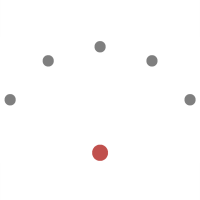
The Chronometric Radial Fitts' Task (CRFT; Czilczer et al., 2026), adapted from the Virtual Radial Fitts' Task (e.g., Caeyenberghs et al., 2009), was developed to address limitations of using deviations from execution durations as an indicator of movement imagery ability. By incorporating Fitts' law (Fitts, 1954), it assesses the extent to which the lawful relationship between movement difficulty and duration is preserved in imagery relative to execution, thereby requiring participants to integrate movement constraints into their mental simulations.
After a comprehension check and familiarisation, participants complete two blocks: execution and imagery. Therein, they execute or imagine tapping between a central circle and radially arranged targets with the dominant hand as quickly and accurately as possible. Each executed or imagined tap is accompanied by a spacebar press with the non-dominant hand. Movement difficulty is manipulated according to Fitts' law, with five difficulty levels presented repeatedly and in random order. Taps are not actively processed, but a touchscreen monitor is recommended as a sturdy tapping surface.
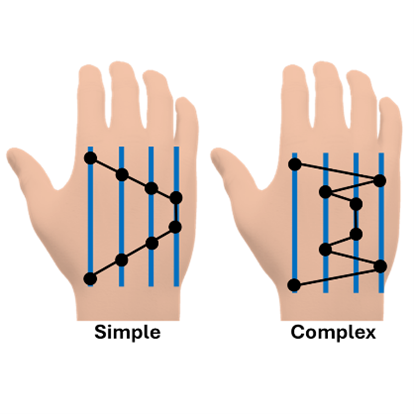
The iFST is adapted from various sequence-learning paradigms frequently used to study motor control (Doyon et al. 1997). Participants are asked to type and imagine finger sequences, and the time employed is measured (Dahm et al. 2023). During imagery, participants must simulate pressing the keys until the sequence is completed, hence the paradigm assesses the ability to maintain movement imagery.
This version of the task, as developed by Moreno-Verdú et al. (2026), consists of typing or imagining different 8-digit sequences with the index, middle, ring and little fingers of the dominant hand. The implementation employs two types of sequences that differ in complexity (based on the number of directional changes, with an equivalent number of digit repeats). This allows observation of sequence complexity effects on both execution and imagery times as a fundamental effect of the paradigm.
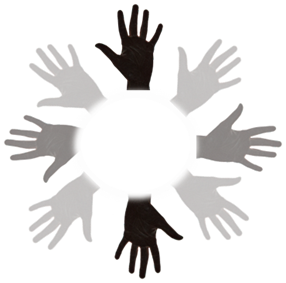
The HLJT was first introduced by Cooper and Shepard (1975), who proposed that participants determine whether a visually presented hand is left or right by moving a mental "phantom" of one of their own hands into the portrayed position and then comparing its imagined appearance against that of the externally presented hand. Many variants of the task have subsequently been examined in the context of studies of motor imagery.
The "biomechanical constraints effect" (where hands presented in more physically achievable medial rotations are processed faster than those requiring difficult lateral rotations) is considered a hallmark of motor imagery deployment in this task.
This version, as developed by Moreno-Verdú et al. (2025), presents hands at 8 angles (0° through 315° in 45° increments) in palmar or dorsal view. The implementation has been verified to yield equivalent results across different response effectors (feet, bimanual, or unimanual), making it suitable for participants with impairments in a specific effector.
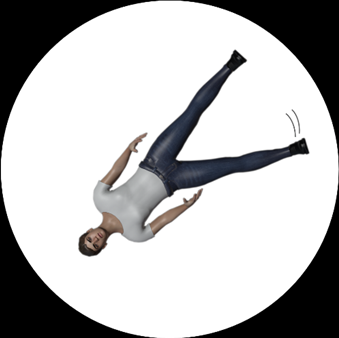
The mental body rotation task is a cognitive test used to assess a person's ability to mentally simulate changes in body position (Steggemann et al., 2011). Participants are shown images of human figures in various orientations and are asked to judge whether the figure's left or right hand (or foot) is raised (Dahm et al., 2022). To do this correctly, they either mentally rotate their own body or the pictured figure in order to establish a perspective overlap.
Response times are typically longer the greater the rotational angle. For mental rotations on the horizontal axis, responses take longer for head-down pictures than for head-up pictures. On the vertical axis, responses take longer for face-to-face pictures than for back-view pictures (which are already aligned with the participant's own perspective).
This version, as developed by Dahm et al. (2022), presents 64 gender-neutral avatar images of a human figure including back and front view perspectives with either a raised foot or hand. Rotational angles include head-up (−45°, 0°, 45°) and head-down (−135°, 180°, 135°) conditions. The main block is preceded by eight familiarisation trials to verify task comprehension.
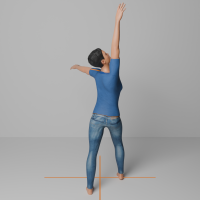
In the Final Position Judgement Task (FPJT), participants imagine executing a sequence of auditorily instructed movements and then judge whether the image of a human figure matches their imagined final position. The FPJT adapts earlier tasks involving final position judgements (e.g., Madan & Singhal, 2013; Naito, 1994; Schott, 2013).
The task begins with familiarisation with the auditory and visual stimuli, a comprehension check, and practice trials. Participants then complete 32 trials in random order. With eyes closed, they listen to auditory instructions requiring them to imagine a starting position and three to six discrete movements of different body parts (head, upper body, left/right limb). Visual rehearsal during imagery is associated with less errors in final position judgements, whereas reliance on verbal rehearsal is not (Czilczer et al., preprint).
Questionnaires for Movement Imagery
The primary focus of this platform is on behavioural tasks. However, self-report questionnaires have been widely used in research and applied contexts to assess imagery generation ability.
A dedicated repository for movement imagery questionnaires (including scoring guidelines and translations) is available below. If you are interested in using questionnaires alongside the behavioural tasks provided here, please refer to this resource.
Contribute a Task
Contributions follow a two-stage process:
- Initial fit check: Submit the completed task fit checklist, the general task information for the platform website, a task image, and the corresponding peer-reviewed article (or preprint) as a PDF or accessible link.
- Repository preparation and final review: Following preliminary acceptance, prepare the open-access repository and README using the README template and complete the repository checklist. The task is added to the platform after successful final review.
Contribute Normative Data
We aim to establish normative data to support interpretation of individual task scores and inform clinical applications of movement imagery practice.
Contributions from researchers and practitioners who have used any of the experiment files are greatly appreciated. To contribute, please email the corresponding author at Carla.Czilczer@uibk.ac.at with the attached data, including any relevant details about your sample (e.g., specific clinical populations).
Users intending to contribute data to the norms data pool should include an appropriate consent statement for data sharing in their ethics applications and participant consent forms.
How to Cite
If you use the MIA Platform or any of its tasks in your research, please cite the platform as well as the relevant task-specific reference(s) listed below.
Researchers using the platform are encouraged to cite and report platform use as follows: “This study made use of the Movement Imagery Ability Platform (Czilczer et al., 2026; https://movementimageryability.github.io/).”
Czilczer, C., Moreno-Verdú, M., Dahm, S. F., & Hardwick, R. M. (2026). Quantifying movement imagery ability: An open-source platform for behavioral assessments. PsyArXiv. https://doi.org/10.31234/osf.io/9xjfb_v1
| Task | Reference | DOI |
|---|---|---|
| CRFT | Czilczer et al. (2026). Behavior Research Methods. | 10.3758/s13428-026-03124-8 |
| iFST | Moreno-Verdú et al. (2026). Behavior Research Methods. | 10.3758/s13428-026-03002-3 |
| HLJT | Moreno-Verdú et al. (2025). Neuroscience. | 10.1016/j.neuroscience.2025.02.056 |
| MBRT | Dahm et al. (2022). Brain Sciences. | 10.3390/brainsci12111500 |
| FPJT | Czilczer et al. (preprint). PsyArXiv. | osf.io/preprints/psyarxiv/4sw6h_v1 |
About the Project
This platform is developed as a collaboration between research groups at the following institutions.